09. november, 2026
– Oppdatert 09. november, 2026
Forskerstafetten: Moumita Sen
Les mer om Gen Z‑opprør, gudelignende politikere og LEGO-bygging! Professor Moumita Sen forsker på hvordan religion, politikk og makt former verden rundt oss. Hun advarer mot å la økonomisk nytte styre hva vi forsker på. Møt en forsker som utfordrer både politikere og akademia i ukens Forskerstafett.
Om forskerstafetten
Sosialantropologen Sindre Bangstad nominerte professor Moumita Sen i Akademikernes forskerstafett.
I Forskerstafetten intervjuer Akademikerne noen av landets fremste forskere om egen forskerkarriere og forskningens betydning for samfunnet. Hver forsker nominerer neste deltaker og sender stafettpinnen videre.
What is the most exciting thing you will be doing this week?
I am working on a piece exploring the erotics, poetics, and aesthetics of Gen Z protest movements worldwide. What is the revolutionary body at the barricade? What emotions circulate between bodies in moments of collective resistance? What political imaginaries emerge? I am particularly interested in how humour, desire, play, and pleasure become part of political resistance. I have been discussing these movements at several panels while developing the ideas into an academic article.
What has your PhD meant for your career?
My PhD explored clay image-making in West Bengal, examining the intersections of political patronage, religious practice, and aesthetics. It laid the intellectual foundations for everything I have done since. Although my research has moved across geographical and political contexts, the central questions remain: how lived religion, politics, images, bodies, and aesthetic practices shape political and religious worlds.
What is the most exciting research/science news you have come across recently?
Some of the most exciting research I have encountered comes from my ERC Starting Grant-funded project, Political Deification: Theorising from Asia (POLDEI), which examines why political leaders are treated as superhuman or god-like figures.
I have been reading about the millenarian imaginaries of techno-feudalist elites, particularly how visions of technological transformation intersect with religious ideas of salvation, apocalypse, and the end of history. Naomi Klein and Astra Taylor call this End Times Fascism.
Within POLDEI, we are also exploring messianism and reincarnation as related political and religious imaginaries. In traditions where time is cyclical rather than linear, messianic politics can centre on the reincarnation of deities. The end times are not really an end. The golden age exists both before and after the messianic rupture!
My colleague Dr. Arden Chao is developing this argument further as a temporal theology. These connections between seemingly disparate worlds open up fascinating ways of understanding contemporary politics.
What is the most important societal challenge that research needs to address right now?
I would distinguish between what is important and what is urgent. The constant demand to respond to crises is itself politically produced. Research must also make room for good scholarship and questions whose significance may not be immediately apparent.
Important to whom? Whose society? At what geographical and temporal scale? Who decides what counts as important knowledge?
I recently pitched the importance of developing theories from the Global South for a prestigious Research Council of Norway grant. A head of research asked: "Why should we fund this? It's not cancer research… It's not like theory from the South saves lives."
My response was: "That depends on whose lives, and what you mean by saving."
That exchange captures something fundamental about how we understand the value of research.
What should politicians do to ensure that Norway gets more value from research?
They need to understand the concept of value better.
Politicians must stop treating universities as factories producing degrees and revenue. Student numbers should not determine whether a discipline survives. This market logic contradicts the very idea of the university.
Universities exist to nourish citizens, cultivate critical thought, preserve and produce knowledge, and enable intellectual life beyond immediate labour-market demands.
If we design universities around the needs of this doomed late-capitalist global regime, we lose the ability to imagine different futures. Young people need universities as playgrounds of the possible, where they can imagine and build futures we cannot.
Look at the youthquake around the world! Look at how young people resist autocratic regimes. Imagine taking away philosophy, theatre, literature, music, and the arts. Students are not numbers; they are drivers of democracy.
Politicians must recognise that not everything valuable can be measured in student numbers, economic returns, or short-term utility.
What was the last book you read, and what did you think of it?
Vivek Shanbhag's slim novel Ghachar Ghochar. It is remarkable how much those hundred-odd pages reveal about capitalism, Indian patriarchy, family dynamics, caste, love, greed, and loss. It made me want to write creatively.
What is the best piece of career advice you have ever received?
Professor Soumyabrata Choudhury, someone I have admired all my life, once told me: "All institutions hold within them the capacity for a certain kind of brutality. I try not to over-identify with institutions. Practising non-belonging — while caring deeply — is difficult, but it's interesting. Maybe you can find your imperfect corner within an institution and work from there too."
This stayed with me. It offers a way to belong to institutions without becoming trapped by them, while retaining the ability to critique, accept criticism, protest, or leave. Even institutions we have built ourselves should never become more important than human beings. They are moments in time, never inalienably our own.
What has been your biggest career mistake, and what did you learn from it?
I spent too much time worrying about the wrong things when I joined an India Studies department full of Europeans as a freshly minted PhD.
Over the years, I have lost faith in area studies. Its history, the politics of South Asian studies, academic elitism, and the hierarchies determining who gets to produce knowledge leave much to be desired.
Being considered an "India expert" when I was born and raised there feels strange. India is an enormous, complex country that nobody can fully master.
Then there are the exhausting politics of insider – outsider identities and who qualifies as an "authentic" fieldworker.
If you are from a place, people question your objectivity. If you are not, they question your language skills, fieldwork, and authority to represent others.
I grew exhausted by the fragility of white anthropologists who felt challenged simply by my background, face, and passport. Equally exhausting was trying to justify my own authenticity through national identity, when identities are shaped by gender, caste, language, and so much more.
I learned how deeply questions of knowledge, authority, and belonging are entangled with academic power.
What is your nerdiest trait?
I have recently become deeply involved in building elaborate LEGO models and imaginary storyworlds with my five-year-old, who seems well on his way to becoming a major nerd!
Who do you think we should interview next?
Professor Bodhisattva Chattopadhyay! His work bridges the humanities, science, and technology. I think his research on future studies is crucial.
Finally, is there a question you wish we had asked you?
I want to ask my fellow academics: What is the future of academia? What should universities look like, and how do we work towards that future?
And what would your answer be?
Teaching is the most important thing I do. But I want to understand what needs to change in its current format. On this question, I want to listen to others.
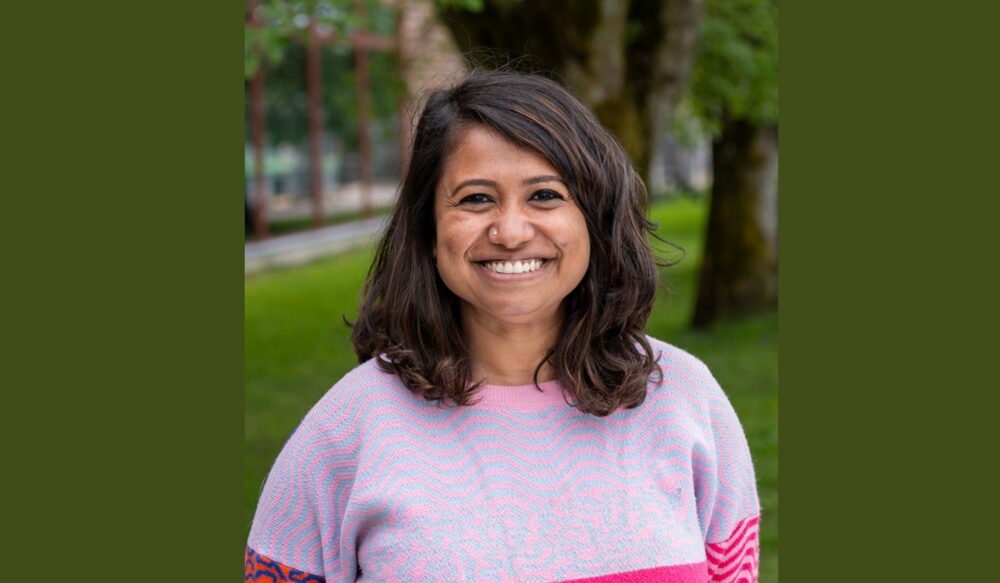
Moumita Sen
Navn: Moumita Sen
Stilling: Professor i kulturstudier ved MF vitenskapelig høyskole.
Utdanning: Mastergrad fra Jawaharlal Nehru University i New Delhi (2009), MPhil fra Centre for Studies in Social Sciences i Calcutta (2011) og doktorgrad fra Universitetet i Oslo (2016).
Forskningsområder: Religion, politikk, visuell kultur, estetikk og sosiale bevegelser, med særlig vekt på India og Sør-Asia. Forsker blant annet på forholdet mellom religiøse forestillinger, politisk makt, nasjonalisme og protestbevegelser.
Bakgrunn: Har vært stipendiat og postdoktor ved Institutt for kulturstudier og orientalske språk ved Universitetet i Oslo. Doktoravhandlingen handlet om religiøs billedkunst i Vest-Bengal i India og forholdet mellom religion, politikk og estetikk.
Verv: Leder det ERC-finansierte forskningsprosjektet Political Deification: Theorising from Asia (2023–2028). Har tidligere ledet forskningsprosjektet Mythopolitics in South Asia (2020–2024) og er medgrunnlegger av forskerkollektivet Theory from the Margins.
Kjent for: Forskningen på religion, kaste, nasjonalisme og politisk makt i India. Mottok H.M. Kongens gullmedalje i 2017 for doktoravhandlingen sin. Har også forsket på islamofobi og hvordan religiøse bilder og fortellinger brukes i politiske konflikter.
Kilde: MF vitenskapelige høyskole